

Current PhD Students
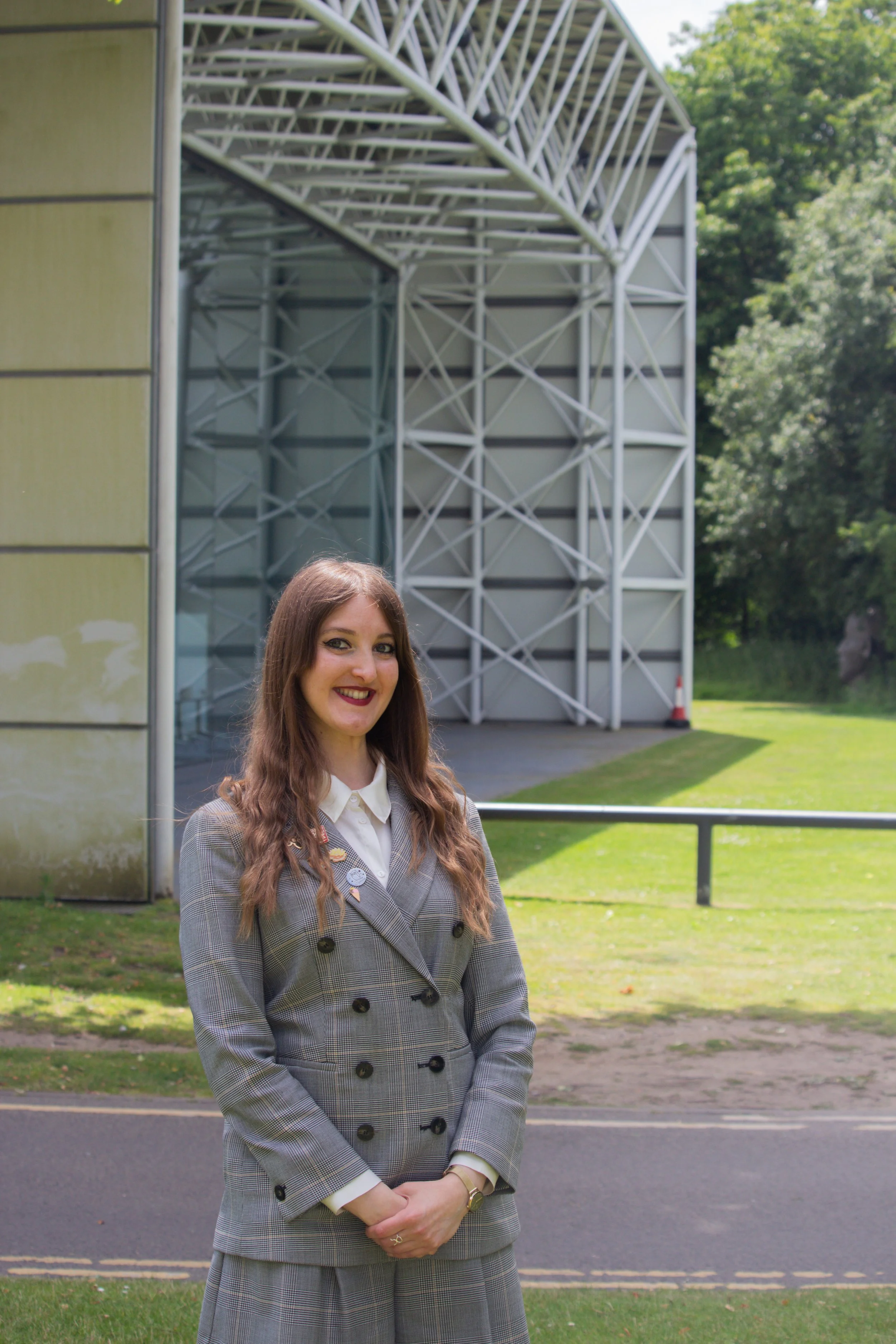
Deborah Dainese
Deborah’s research consists in writing the biography of the Congolese modern artist Gabriel Matshitolo Mwata Sola, who lived and worked in the present-day Bandundu region in the mid-Twentieth century. She is particularly interested in Congolese colonial and post-colonial art, archives, and missionary collections.
Trained as an Art Historian, Deborah has gained valuable knowledge and experience in curatorial museum practice through her position as assistant curator, art cataloguer, and visitor assistant at the Diocesan Museum of Vicenza (Italy). In 2023, she worked as assistant curator for Africa, with special emphasis on provenance research, at the Ethnological Museum “Anima Mundi”, Vatican Museums. She is currently working on projects focusing on the constitution of early collections in Italy and the Vatican.
Since completing her MA at SRU (2019), Deborah has been a member of the Centre for African Art and Archaeology. She is also the Centre’s poster designer.
Deborah is also a freelance illustrator working with mixed media techniques. Examples of her work can be found at deborah_dainese.
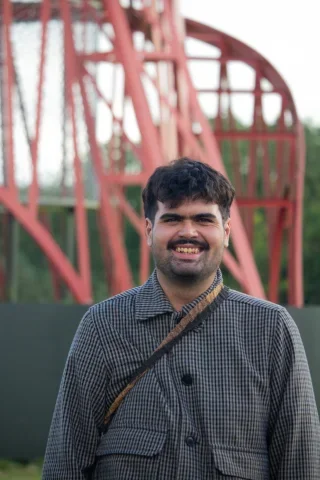
Cristina Fernandes
Cristina is funded by the CHASE doctoral consortium. She holds a BA in Art History from the Federal University of São Paulo (UNIFESP) and an MA from the Sainsbury Research Unit at the University of East Anglia.
Her doctoral research examines internal restitution claims by Bakongo and Chokwe communities to Angola's National Museum of Anthropology in Luanda, exploring the intersections of postcolonial statehood, traditional authority, and material culture.
Her professional experience spans research, curation, archival research, collection documentation, and education across cultural institutions. In 2025, she served as curatorial assistant for the Frestas Triennial at SESC Sorocaba and contributed to the research and writing for the Museu Afro Brasileiro Emanoel Araújo catalogue.
She serves as Kikongo Language Coordinator at the Kongo Academy, an international platform dedicated to Kongo history and culture. Her broader interests include the relationship between cultural institutions and the politics of identity — national, ethnic, and territorial — with a particular focus on museums as contested sites of nation-building in postcolonial contexts.
Enzo Hamel
Enzo is a PhD student funded by an AHRC-CHASE and Stuart Hall Foundation scholarship. He graduated from Art History and Museum Studies at the École du Louvre and from Anthropology at the Université Paris-Nanterre.
His doctoral research develops a collaborative analysis of Gregory Bateson’s archives with contemporary latmul communities (East Sepik Province, Papua New Guinea). Focusing on photography and fieldnotes, he explores the potential of such collections for understanding local agencies, cosmologies, and epistemologies, as well as the multiple affordances of archives for the present and future of latmul communities.
His work draws from multiple research experiences in museums and archives across the UK, the US, France, and the Netherlands. For his PhD, he has carried out archival research at the Museum of Archaeology and Anthropology (Cambridge, UK) and the Library of Congress (Washington, DC). Since 2023, he has conducted ethnographic research in the latmul region. In 2023, he was awarded a UK Research and Innovation Fellowship to examine the Margaret Mead Papers and South Pacific Ethnographic Archives at the Library of Congress’s John W. Kluge Center. His work appears in Pacific Art Journal, Etnofoor, and The Australian Journal of Anthropology.
Enzo is co-founder of CASOAR, a blog and association focusing on the arts and cultures of Oceania, which received the Young Researchers’ Scholarship from the French National Institute for Art History.
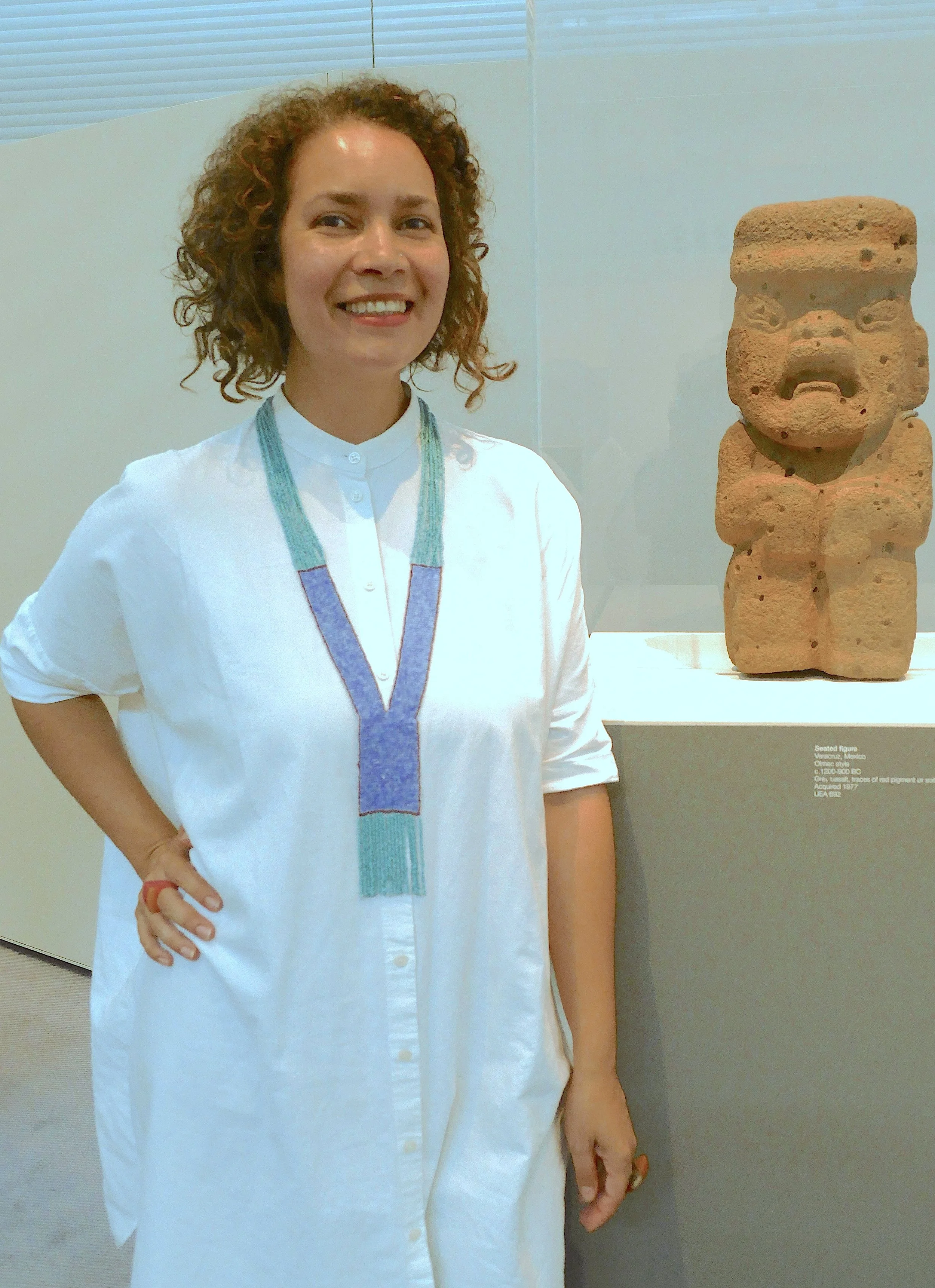
Anahí Luna
Anahí is an AHRC-CHASE-funded PhD student. She holds a BA in Social Anthropology and two MAs in Art History from the National Autonomous University of Mexico and the Sainsbury Research Unit, UEA. She is a specialist in the arts of Oceania and the Americas. In her work, she explores how indigenous art embodies a complex system of knowledge (involving optical, phenomenological and environmental phenomena) which deserves to be understood and respected.
Her PhD research focuses on female tattooing in the Central Province of Papua New Guinea, where she has done collaborative fieldwork among Roro and Mekeo communities, documenting their social history, material culture and artistic practices.
She is also a freelance curator and specialist in the work of the Mexican artist Miguel Covarrubias (1904–1957), on whom she has published essays in specialist books and academic journals. Since 2022, she has been authenticating Covarrubias’ art, working closely with art galleries, private collectors and auction houses. In 2025, she co-curated the exhibition “Miguel Covarrubias. Una mirada sin fronteras” (Palacio de Iturbide, Mexico City), which attracted more than 250,000 visitors.
Examples of her publications can be found at https://eastanglia.academia.edu/AnahíLuna
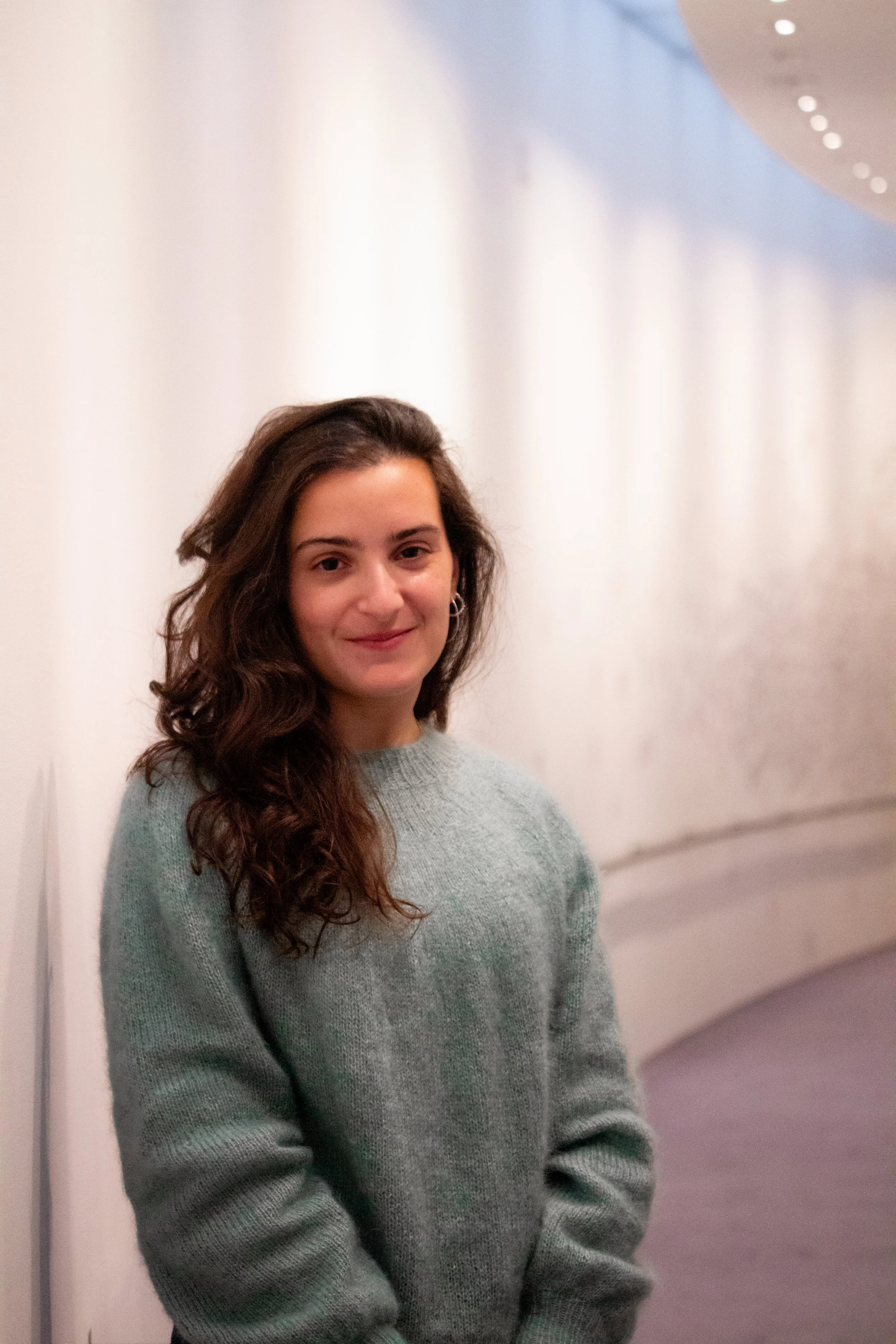
Garance Nyssen
Garance is a French PhD student funded by AHRC-CHASE. She holds a BA and a MA in art history and museum studies from the École du Louvre (Paris) and a BA and a MA in anthropology from the Université Paris Nanterre. Garance is also the co-founder of CASOAR, a blog and association dedicated to the history, art and anthropology of Oceania.
Garance’s research focuses on the return of seventeen ancient Polynesian objects to the Te Fare Iamanaha – Musée de Tahiti et des Îles (Tahiti, French Polynesia). She looks at the process of these returns and their aftermath, specifically for two of the objects: a presumed fragment of maro ‘ura and a maro kura. Rooted in an ethnographic methodology, Garance and her collaborators in Tahiti, Ra‘iātea and Ganā islands aim at understanding the materiality of the objects, the cosmological contexts which framed their existence and use two centuries ago, the reasons why they left their islands at the beginning of the 19th century, and also what future lies ahead for them.
Séverine Toyon-Pope
Séverine is a AHRC-CHASE funded PhD student. She holds a BA in ethnology from the Université Aix-Marseille 1 and a first year MA in anthropology from the Université de Strasbourg (France), as well as an MA in Museum studies from the University of Leicester, and an MA in the Arts of Africa, Oceania and the Americas from the University of East Anglia. Her internships and placements at the National Gallery of Australia (Canberra), the Musée de l’Hospice Saint-Roch (Issoudun, France) and the Pitt Rivers Museum (Oxford, UK) have nurtured her interest in Pacific material culture and allowed her to gain knowledge in collections management and curatorial practices.
Séverine’s research examines the making and circulation of artefacts from central Polynesia (now French Polynesia and the Cook Islands) circa 1810–1850, which are now part of museum and private collections in the UK, France and New-Zealand. Through the examples of paddles from Raivavae and adzes from Mangaia, as well as Society Island barkcloth and fishhooks, her thesis focuses on Indigenous and European strategies at work in these early Nineteenth century cross-cultural exchanges at a time of great cultural, social, political and religious change for Polynesians.